


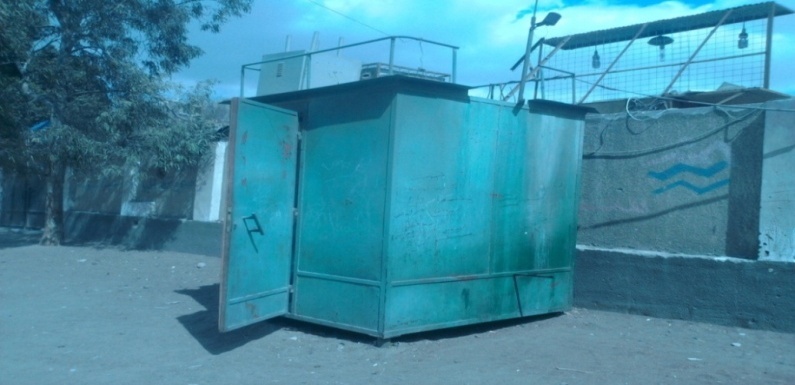
History and technical overview of Egypt’s National Ambient Air Quality Monitoring Network operating 116 real-time monitoring stations.
National Ambient Air Quality Monitoring Network
Air pollution is among the most pressing contemporary environmental challenges. Atmospheric contamination occurs when gaseous, liquid, or particulate substances reach concentration thresholds harmful to human health, ecosystems, or material assets.
History & Inception of Egypt's National Air Quality Network:
The National Ambient Air Quality Monitoring Network was established in 1999 as a joint sovereign initiative between the Egyptian Environmental Affairs Agency (EEAA) and the Danish International Development Agency (DANIDA), followed by nationwide technical expansion with the Japan International Cooperation Agency (JICA). CHMESR at Cairo University assumes full technical, operational, and metrological management of the entire network.
Station Distribution & Geographical Reach:
- The network currently operates 116 continuous telemetry monitoring stations covering industrial, urban residential, vehicular traffic, coastal, and rural background environments.
- Geographical coverage spans Greater Cairo, the Nile Delta, Suez Canal zone, Alexandria, the North Coast, Upper Egypt, and the New Valley.
- Stations perform automated continuous 24/7 measurement of SO2, NOx, CO, O3, PM10, PM2.5, and local meteorological parameters.
- Telemetry data is transmitted in real time to the Ministry of Environment and Cairo University central data servers to calculate the Air Quality Index (AQI) and alert policymakers.